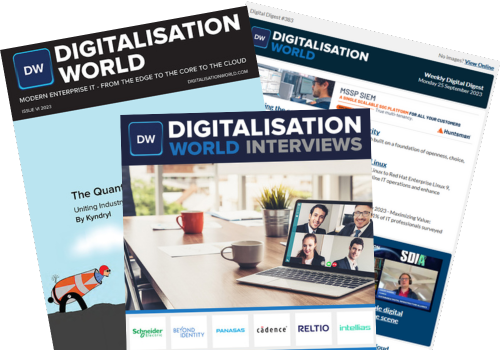
Digital Newsletter
Each week our editor Phil Alsop rounds up the most popular articles, videos and expert opinions. We compile this into a Digital Newsletter and send it straight to your inbox every week.
Digital Magazines
We'll let you know each time a new edition of Digitalisation World is released so that you're always kept up-to-date with the latest and greatest news and press releases.
Video Magazines
The Digitalisation World Video magazine contains the latest Zoom interviews with experts in the industry.
The growing acceptance of bring your own device (BYOD) and the adoption of a variety of customer and employee facing mobile applications is generating demand for various enterprise mobility management (EMM) solutions. According to Kable, the global EMM market was worth $5.7 billion in 2013 and is forecast to reach $15.7 billion by 2018, growing at a CAGR of 22.4% from 2014 to 2018. Of the various EMM solutions, the mobile application platform management (MAPM) segment accounted for the largest share (48%) of the overall EMM market in 2013.
Moreover, development in the fields of machine to machine (M2M) computation and wearable computing devices are impacting the enterprise mobility segment, forcing organisations to deploy robust EMM solutions to manage a wide variety of devices and applications. Consequently, the demand for mobile device management (MDM) solutions is also growing, as CIOs and IT departments look to manage and securely integrate the growing number of mobile devices, as well as their operating systems and applications. According to Kable, the global MDM market was worth $909 million in 2013 and is forecast to reach $2.4 billion by 2018, growing at a CAGR of 22.2%.
The EMM market is crowded with a range of established and niche providers, and Kable believes that the segment is set to witness some consolidation activities in the coming years. According to Kable’s vendor market share analysis, the EMM market is fragmented, with the top 10 vendors contributing only 37% of the total EMM market size in 2013. SAP is leading the EMM market with a market share of 13.4% in 2013, followed by Citrix and Tangoe with market shares of 3.5% and 3.3% respectively. Piyush Sharma, analyst at Kable, says: “With mobile platforms becoming the first point of contact, the demand for mobile application development will gain traction. Consequently, software developers prioritise the development of mobile versions for new applications over desktop versions to cater to the ever increasing population of mobile users." However, Kable notes that enterprise mobility vendors should be wary of organisations’ concerns relating to security, costs and the lack of mobility policies, which may hinder the pervasive adoption of enterprise mobility among enterprises.