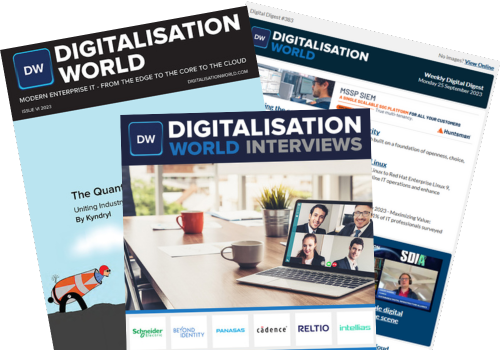
Digital Newsletter
Each week our editor Phil Alsop rounds up the most popular articles, videos and expert opinions. We compile this into a Digital Newsletter and send it straight to your inbox every week.
Digital Magazines
We'll let you know each time a new edition of Digitalisation World is released so that you're always kept up-to-date with the latest and greatest news and press releases.
Video Magazines
The Digitalisation World Video magazine contains the latest Zoom interviews with experts in the industry.
Enterprises are investing in digital transformation, and a study by Forrester Consulting—commissioned by SAP and Syniti (part of Capgemini)—examines how financial returns may be higher when companies take a more deliberate, data-first approach.
Findings from the study indicate that organisations prioritising data accuracy, governance, and large-scale usability may be more likely to achieve returns from transformation projects. Based on a hypothetical global company with 10,000 employees and $5 billion in revenue, the study reports the following estimated impacts:
Despite these reported benefits, the study also highlights common data-related challenges that can affect transformation efforts:
Where these challenges are addressed, the study associates several operational changes:
Overall, the study suggests that treating data as a foundational element—ensuring it is accurate, governed, and accessible from the outset—may support smoother transformation delivery, reduced costs and risks during implementation, and continued value after completion. It also links this approach with improved decision-making, operational performance, and efficiency.