
Digital Newsletter
Each week our editor Phil Alsop rounds up the most popular articles, videos and expert opinions. We compile this into a Digital Newsletter and send it straight to your inbox every week.
Digital Magazines
We'll let you know each time a new edition of Digitalisation World is released so that you're always kept up-to-date with the latest and greatest news and press releases.
Video Magazines
The Digitalisation World Video magazine contains the latest Zoom interviews with experts in the industry.
Globally, cloud and internet companies are expanding their infrastructure, building between 120 and 140 new data centres each year. This growth reflects increasing capacity requirements associated with the development of artificial intelligence and cloud services.
Data centres, where digital data is stored, processed and secured, are also considered part of the infrastructure supporting European digital sovereignty. More than 3,300 facilities are currently distributed across around 40 countries. Within Europe, France is one of the largest markets, with more than 300 operational data centres. Capacity in the country is projected to increase sixfold by 2035, and construction activity continues across the sector.
A typical data centre contains servers, cooling systems, software architectures and extensive cable networks. These cables connect power supplies, control systems, security equipment and other operational systems. As a result, cables form an important part of the overall infrastructure.
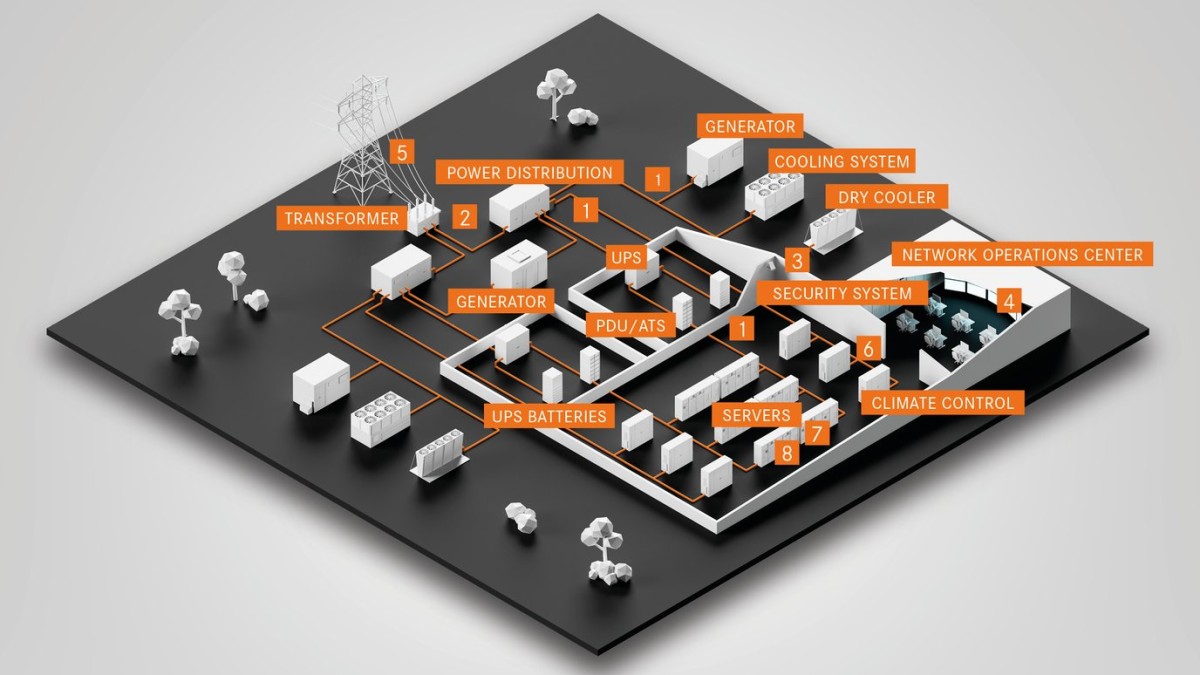
Each cable is designed to meet specific operational requirements, helping to reduce the risk of signal interruptions or system failures. Through engineering design, cables incorporate materials and structures intended to perform according to industry standards and support fire risk mitigation.
Like other buildings, data centres rely on systems such as electricity, ventilation and safety infrastructure. However, these facilities operate under significant thermal loads due to their high energy consumption. This requires large-scale cooling systems, which also carry environmental considerations.
Fire risk is one of the potential hazards in such environments. The 2021 fire at the OVHcloud data centre in Strasbourg highlighted the operational vulnerability of these facilities. The incident caused significant service disruptions, and similar events can result in substantial financial losses. Industry estimates suggest that operational shutdowns can cost between £200,000 and £400,000 per hour, depending on the scale of the disruption.
Within this context, the Construction Products Regulation (CPR) classification system is used to assess how cables react in the event of a fire. The system evaluates factors such as flame spread, smoke production and the emission of acid gases.
The classification aims to support two objectives: improving safety for building occupants by enabling safer evacuation conditions, and helping to limit damage to infrastructure and equipment during a fire.
Smoke is often considered one of the main hazards in confined environments such as data centres. Cable design can influence the volume and composition of smoke produced during combustion, which depends on how different cable layers react to heat. Similarly, limiting the emission of corrosive gases is important for protecting both personnel and sensitive electronic equipment.
Another factor is the formation of flaming droplets. In certain conditions, melting cable materials may drip and contribute to the spread of fire. Cable structure and material selection play a role in reducing this risk.
These considerations illustrate the role that cables play in the overall safety and operation of data centre infrastructure. Their design involves balancing regulatory requirements, operational risks and performance expectations.
Collaboration between manufacturers, integrators and design teams is often required to ensure that cable systems meet the technical and safety requirements of large-scale data centre projects.