Digital Newsletter
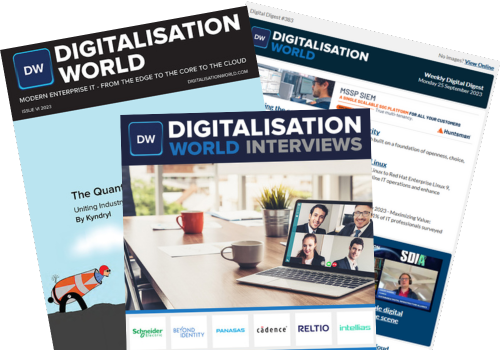
Each week our editor Phil Alsop rounds up the most popular articles, videos and expert opinions. We compile this into a Digital Newsletter and send it straight to your inbox every week.
Digital Magazines
We'll let you know each time a new edition of Digitalisation World is released so that you're always kept up-to-date with the latest and greatest news and press releases.
Video Magazines
The Digitalisation World Video magazine contains the latest Zoom interviews with experts in the industry.
Canals has introduced new offerings aimed at supporting an end-to-end Operating AI approach for wholesale distributors. The capabilities are designed to support operational processes across functions including Sales, Customer Service, Accounting, Purchasing, and Receiving, with the aim of reducing processing times and supporting customer interactions across the organisation.
Distributors handle a range of customer interactions, including orders, quotes, and inquiries related to products, order status, and billing. In response, Canals has expanded its automation capabilities to support handling of these inquiries and to assist in providing responses across different workflows.
One of the features is AI PO-to-Receipt Tracking. This capability updates ERP systems by automatically reading and uploading PO Acknowledgements, Advance Ship Notices, and packing slips, or by integrating with vendor APIs. Reported results include up to 80% time savings for Purchasing and Receiving teams, along with improved ERP data consistency for customer-facing teams.
Another feature, AI Accounts Receivable, is designed to support cash application by matching payments to invoices and identifying discrepancies for review. Reported outcomes include up to 99% match accuracy, with the aim of reducing manual processing and supporting customer communications.
AI Inquiry Handling is designed to generate suggested responses to inquiries related to order status, products, and billing. It identifies the type of inquiry and retrieves relevant information from ERP systems to support response generation and reduce manual searching.
The Ask Canals Chatbot provides responses to questions about product information, availability, specifications, and policies. It uses cited information to provide answers and reduces the need to search across multiple sources or rely on individual employees.
The Live Voice feature supports order entry from spoken interactions by transcribing audio and converting it into structured line items in real time. This enables orders to be created in scenarios such as phone calls or field interactions, with the aim of reducing errors and follow-up requirements.