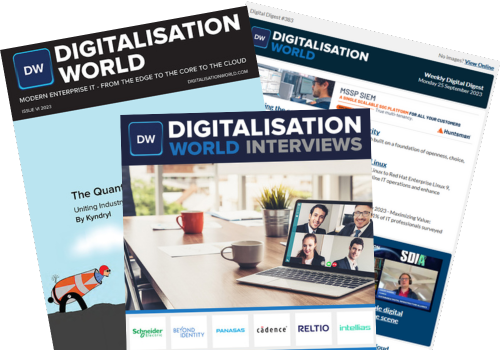
Digital Newsletter
Each week our editor Phil Alsop rounds up the most popular articles, videos and expert opinions. We compile this into a Digital Newsletter and send it straight to your inbox every week.
Digital Magazines
We'll let you know each time a new edition of Digitalisation World is released so that you're always kept up-to-date with the latest and greatest news and press releases.
Video Magazines
The Digitalisation World Video magazine contains the latest Zoom interviews with experts in the industry.
Camunda's latest report, 2026 State of Agentic Orchestration and Automation, reveals a disparity between the vision of agentic AI and its current application. While 71% of organisations claim to employ AI agents, only 11% of agentic AI use cases have been actualised in production over the past year. The report found that 50% of participants caution that unchecked agentic AI may increase the impact of poorly implemented processes.
Trust Barriers Persist: As organisations experiment with AI agents, the report reveals that trust is a critical roadblock. 84% express concerns about the business risks posed by AI in everyday operations without adequate IT oversight. Additionally, 80% are troubled by the transparency deficit in AI usage, and 66% voice compliance worries regarding AI agents.
The uneven patterns of agentic AI adoption are evident, with 80% acknowledging that most AI agents are relegated to chatbots or assistants rather than tackling crucial cases. Additionally, 48% report AI agents operating in isolated silos, disconnected from comprehensive business processes.
Automation Challenges: While automation drives growth—95% of firms noted business upticks due to automation—it's also a double-edged sword. Technological complexity outpaces management, as the proliferation of diverse endpoints unveils new challenges. More than three-quarters of organisations observe an exponential increase in endpoint diversity, necessitating superior tools and strategies to optimise their AI and automation ventures.
Agentic Orchestration as a Way Forward: The report champions agentic orchestration as the path to bridge the AI vision-reality gap. This model merges deterministic and dynamic orchestration, infusing dynamic reasoning within processes to foster real-time adaptability. However, 85% of entities admit to insufficient process maturity to implement such sophisticated orchestration effectively.
Building Trust and Maturity: Establishing trust remains significant. As the technological environment becomes more intricate, organisations should focus on cultivating this trust to advance from pilot stages to deploying transformative AI capabilities. Agentic orchestration will be crucial, demanding that AI is integrated to ensure compliance and extract maximum benefit.