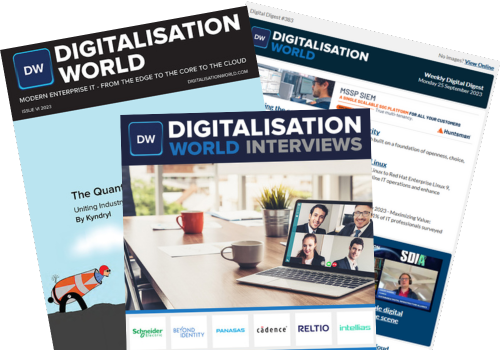
Digital Newsletter
Each week our editor Phil Alsop rounds up the most popular articles, videos and expert opinions. We compile this into a Digital Newsletter and send it straight to your inbox every week.
Digital Magazines
We'll let you know each time a new edition of Digitalisation World is released so that you're always kept up-to-date with the latest and greatest news and press releases.
Video Magazines
The Digitalisation World Video magazine contains the latest Zoom interviews with experts in the industry.
xThe growing volume of containerized workloads is driving up demand for greater visibility across DevOps teams. In response, the industry is delivering next-generation solutions, featuring intuitive dashboards, AI-driven insights, and open-source innovations to help reduce complexity and expand access for a broader range of IT professionals, says GlobalData, a leading data and analysis company.
An increase in telemetry data management requirements associated with containerized applications and microservices across highly distributed systems has prompted the need for greater visibility among more DevOps team members. As a result, the industry will see enhanced observability solutions in the next six to twelve months, which address more enterprise IT roles through improved dashboards, open-source software (OSS), and AI/GenAI integrations. Enterprise developers involved in Kubernetes container app modernization projects will benefit through greater access to sophisticated technologies.
Charlotte Dunlap, Research Director, Enterprise Technology and Services at GlobalData, says: “While the industry’s leading OSS technology among DevOps teams holds great promise, Kubernetes continues to be daunting in its current form, largely due to a lack of a feasible UI. There remains a steep learning curve associated with Kubernetes implementations along with all the moving pieces involved in configurations, including networking, security, observability, and service mesh.”
Significantly improved dashboards represent a key component in the adoption of DevOps platforms and tools moving forward. It is also the best route to acquire enterprise developer loyalty by ensuring enhanced access to high-productivity tools.
Dunlap adds: “Improved UIs and new OSS innovations were particularly apparent among observability solutions during this month’s KubeCon conference in London.”
Key OSS technologies which were highlighted during the conference include: Perses, a lightweight UI that integrates well into dashboards; Backstage, an OSS framework used to build developer portals and improve the developer experience (DX); and Microsoft-backed Headlamp, a Kubernetes multi-cluster management UI that streamlines container management and deployments.
Dunlap concludes: “Removing friction is now the primary mantra in making app modernization successful. As Kubernetes adoption expands, reducing complexity through intuitive interfaces and intelligent automation is essential. Observability tools that integrate AI and open-source technologies not only empower DevOps teams but also bring more IT roles into the modernization journey. The focus must now shift to creating cohesive, user-friendly platforms that drive efficiency, scalability, and faster time to value.”