Digital Newsletter
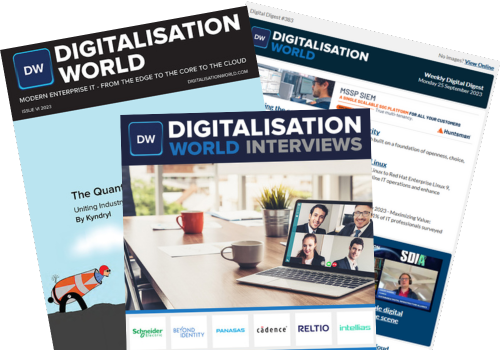
Each week our editor Phil Alsop rounds up the most popular articles, videos and expert opinions. We compile this into a Digital Newsletter and send it straight to your inbox every week.
Digital Magazines
We'll let you know each time a new edition of Digitalisation World is released so that you're always kept up-to-date with the latest and greatest news and press releases.
Video Magazines
The Digitalisation World Video magazine contains the latest Zoom interviews with experts in the industry.
Almost two thirds (61%) of business decision-makers believe that large enterprises will be the primary creators of AI in future, with few believing that consumers (18%) or startups (28%) will have the capability and power to develop new systems. According to the research, the main barriers to AI software creation include cost (46%), technical skills (39%) and ethical concerns (31%), demonstrating a clear need for upskilling, educational resources and the availability of cost-effective infrastructure to make AI creation accessible for all.
“AI is a tremendous force for good, but to make sure that it benefits us all, we must democratise access,” said Emma Dennard, VP Northern Europe, OVHcloud. “We need to create a future where everyone understands the possibilities and challenges that AI brings, where technical skills are taught to all, and to develop systems that make the creation of AI systems as simple as putting a jigsaw together.”
The research, which polled 500 senior business decision makers, found that just under half (46%) believed that both businesses and consumers would be the primary users of AI, while over a third (36%) believed that businesses alone would be the main users.
“Everyone is going to benefit from AI in future,” continued Dennard. “AI and generative AI have a lot to offer, from helping with everyday tasks and automating routine jobs in the office to improving customer service and analysing complex data. But with AI still in its infancy, it’s critical that we take steps today to create the industry we want tomorrow.”
Although the research indicated that AI is unlikely to be created by consumers in future, 38% of the study did believe that AI had the power to make technology accessible to all, highlighting the technology’s ability to democratise itself. However, even business decision makers had concerns about making AI work for their organisations, as 31% of those in large organisations (over 500 employees) found that making a business case for AI was a challenge, with 32% experiencing governance issues.
“Consumers and organisations alike face all kinds of challenges in creating and using new AI systems,” concluded Dennard. “The important thing is that we build an industry that will enable democratised access to systems and infrastructure, as well as teaching the skills and discussing the ethical challenges and responsibility that comes with these applications. Otherwise, we run the risk of leaving these powerful tools in the hands of a few very large enterprises, rather than having a truly democratic, fair and open AI future.”