Digital Newsletter
Each week our editor Phil Alsop rounds up the most popular articles, videos and expert opinions. We compile this into a Digital Newsletter and send it straight to your inbox every week.
Digital Magazines
We'll let you know each time a new edition of Digitalisation World is released so that you're always kept up-to-date with the latest and greatest news and press releases.
Video Magazines
The Digitalisation World Video magazine contains the latest Zoom interviews with experts in the industry.
As the global competition for AI leadership intensifies, the UK is stepping up its mission to become an AI Maker. As demand increases, so too does the need for the secure, scalable and sustainable infrastructure to accommodate it. The UK ranks among the world’s top three data centre markets and they sit at the core of the country’s AI ambitions, almost 100 new data-centre sites are already in the pipeline, with an estimated 477 facilities in operation. Nowhere is more visible than in the UK’s densest of clusters where South-West London remains the heartland, but Manchester is rapidly becoming the UK’s secondary hub and AI Growth Zones are now confirmed in North England, Wales and Scotland, so it is no longer a London story.
The government’s AI Opportunities Action Plan - with a record investment from big tech - now considers data centres as critical national infrastructure (CNI) and of equal importance as energy water.
During the 2026 event, as the UK’s energy technology provider, Schneider Electric will explore how we can scale AI infrastructure responsibly by bringing together industry leaders to discuss strategies for sustainable growth, innovative cooling solutions and the transformative potential of AI-powered operations in shaping the data centres of the future.
The Impact of Investment and AI Growth Zones
Prioritising data centres has opened the gates for innovation, investment and opportunities. DataVita’s – Scotland’s data centre provider, colocation and cloud services expansion is strengthened by CoreWeave’s £1.5 billion commitment, and confirms Scotland’s growing strategic relevance alongside its role as a natural focal point for the UK’s next generation of AI infrastructure. Further announcements by major global technology companies, including Stargate UK, has also strengthened the UK’s leadership position. Google’s £5 billion commitment to accelerate UK AI infrastructure, cloud services, and research capability, Microsoft’s $15 billion to build the UK’s largest supercomputer in partnership with NScale at its AI Campus in Loughton, and the £10 billion AI campus in Blyth led by the Blackstone Group - all signify 2026 to be a year defined by large-scale AI infrastructure build-outs.
As hyperscalers and fast growing neocloud providers vie to secure high-density, AI-driven capacity in the UK, new AI Growth Zones are emerging and operators are aligning with government policies to help the country its economic and technological ambitions. Each growth zone is planning for more than 500MW of capacity, and operators are already grappling with much denser loads that demand innovative approaches to power, cooling, and infrastructure design.
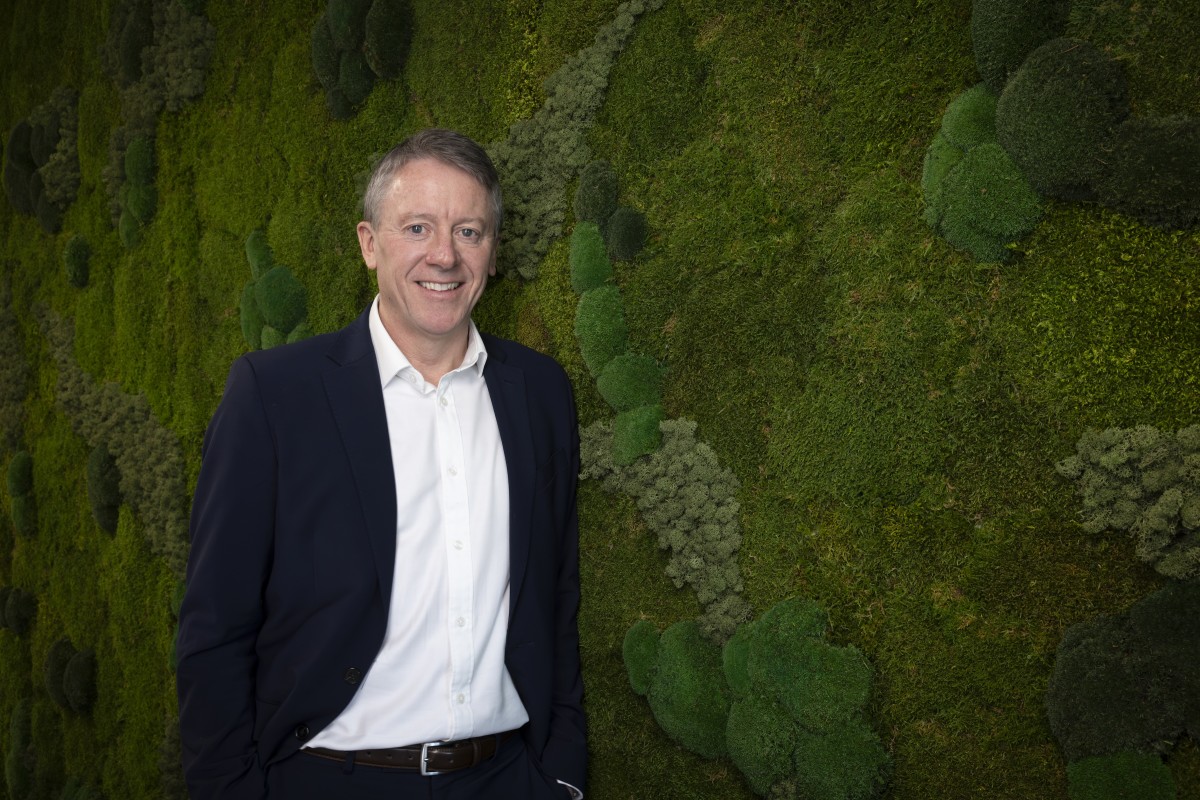
On 4th March at 11:10am, Schneider Electric’s Vice President of Secure Power & Data Centres for the UK & Ireland, Matthew Baynes, will discuss how the UK is evolving alongside advanced technology to have a place in the AI race. The session will focus on the importance of scaling AI responsibly, prioritising energy efficiency and innovation in data centres.
Liquid Cooling: Meeting the Challenge of Density
As rack densities soar to support AI workloads, liquid cooling has moved from an emerging technology to infrastructure. The challenge is no longer whether to adopt liquid cooling, but how to deploy if effectively at scale. Also, on 4th March at 12:50pm-13:15pm, Matthew will chair a panel discussion on tackling liquid cooling challenges in data centres, and will unpack the innovations, risks and realities behind the technology. During the session, he will be joined by Andrew Whitmore, Vice President of Sales at Motivair by Schneider Electric, Charlie Bater, Chief Technical Officer at Black & White Engineering, Ian Francis, Global Design & Engineering SME at Digital Realty, and Alistair Barnes, Head of Mechanical Engineering at Colt Data Centre Services. They will bring together perspectives from across their experiences to unpack practical considerations operators face when deploying liquid cooling.
Schneider Electric’s approach to this challenge combines AI Pods and Cooling Distribution Units (CDUs) that showcase our sustainable approach. Our AI Pods (EcoStruxure Pod Data Centres) are pre-built modular units combining computing power, liquid cooling plumbing and power distribution - all arriving ready-to-deploy for AI cluster rollout versus traditional construction. Our CDUs then pump cool liquid directly to hot chips, absorb the heat, and circulate it away in a closed-loop system at precise temperature and pressure - cutting water use by 90% versus air cooling while preventing high-density AI hardware from overheating. These prefabricated solutions aim to cut waste and accelerate deployment, as Compass Datacentres achieved with 40% fewer on-site interventions and 20% OPEX savings. Meanwhile, our 800VDC sidecar feeds racks with direct current to avoid unnecessary conversion losses.
How agentic AI transforms data centre services
While AI is driving demand for data centre capacity, it is also transforming how these facilities are operated and maintained. On the 5th March at 11:15am-11:45am, Natasha Nelson, Chief Technology Officer at Schneider Electric’s Services business, will deliver a keynote exploring how agentic AI can transform data centre services at scale. During the session, Natasha will explore the role of agentic AI and Augmented Operations in delivering highly skilled technical services both remote and on-site – for electro-sensitive environments such as large-scale data centres, unpacking how AI-powered decision-making and human expertise can create a new era of service excellence - where intervention is smarter, faster and more sustainable.
All of this is tied into one power chain, complemented by our EcoCare service, which uses AI enabled remote monitoring to cut site visits and reduce operating costs. EcoStruxure Foresight Operation functions as a unified platform for monitoring and managing energy, power and building systems within AI infrastructure, providing visibility and operational insights. Energy, power and building systems are unified into this single, AI-powered platform - giving customers control, visibility and predictive insight. Built for performance and ready for scale, the operation platform for the built environment increases deployment, uptime, cost and operational efficiency.
Building Resilient Power Infrastructure
At Stand D140: Schneider Electric showcases technologies, featuring experts from Secure Power, Digital Energy, and Power Products divisions.
Our integrated power chain begins with Ringmaster AirSet compact switchgear directing high-voltage power and preventing overloads. Galaxy UPS systems provide resilient backup, keeping AI servers running continuously. Inside facilities, iLine busbar replaces cable complexity with overhead power bars, while 800VDC sidecar delivers direct current to racks, avoiding conversion losses.
Lifecycle services orchestrate this seamless system—from Galaxy UPS enabling rapid repair to cabling controlling power safely. This de-risks expansion, ensures UK regulatory compliance, and delivers efficient, long-term AI infrastructure.
Software and Digital Services
The software pods demonstrate comprehensive digital solutions for monitoring, controlling, and optimising infrastructure. EcoStruxure Data Centre Expert provides real-time power and cooling visibility, while Aveva and ETAP Digital Twins enable simulation, design, and automation of critical systems.
EcoStruxure Building Operation facilitates secure data exchange from third-party energy, HVAC, fire safety, and security systems. Power Monitoring Expert (PME) delivers electrical system insights for improved performance and sustainability, connecting smart devices across electrical systems and integrating with process controls for real-time monitoring.
Join us at Stand D140 during Data Centre World London to be part of the conversation on scaling sustainable, efficient and resilient data centres together.